Science News
 American
Science News for 17 April 2013
American
Science News for 17 April 2013
5 Ways Drones Could Help In A Disaster Like The Boston Marathon Bombing
Popular Science - 17 Apr 2013 23:00
Plus three robots that are already saving lives. Yesterday, the President of the Association for Unmanned Vehicle Systems International Michael Toscano told U.S. News: "Whether it is in response to a natural disaster or ...
Audi Wants Its Cars To Predict Where Traffic Will Be
Popular Science - 17 Apr 2013 21:30 Side-stepping traffic by mining data At the GPU Technology Conference 2013 show in San Jose, Audi announced some of its plans for its Cars of the Future, The Register reports. One of the coolest ideas: cars that can pred...
Synthetic malaria drug could stem resistance
New Scientist - 17 Apr 2013 21:00
A synthetic version of the world's most effective antimalarial can be made in three weeks, pushing out firms whose therapies promote drug resistance
Robot builders deliver architects' dreams
New Scientist - 17 Apr 2013 20:00
The next wave in digital construction will see complex buildings erected perfectly by automated robot arms, or even 3D-printed on the spot in concrete (full text available to subscribers)
EuropaCity Is The Ultra-Green Mall Of The Future
Popular Science - 17 Apr 2013 19:30 Imagine a mall. Now imagine a mall in the year 2150. The design firm Bjarke Ingels Group (BIG), along with a few added team members (Tess, Transsolar, Base, Transitec, and Michel Forgue) have won first place in a competi...
Today on New Scientist: 17 April 2013
New Scientist - 17 Apr 2013 19:00
The latest stories on newscientist.com: Wikipedian woes, oldest human skin, bespoke organ transplants, when a black hole is born, and more
Lab-grown kidney blazes trail for bespoke donor organs
New Scientist - 17 Apr 2013 19:00
The successful transplant of lab-grown rat kidneys is just the start - teams are working on a host of replacement body parts, from noses to hearts (full text available to subscribers)
Oversubscribed Five-to-One, FutureMed Adds November Date in San Diego
Singularity Hub - 17 Apr 2013 17:37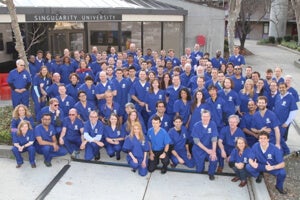 Singularity University's FutureMed continues to be a hot ticket. Following the successful (and sold out) February program, the organizers of FutureMed have announced a second program in November 2013. The more intimate a...
Festo's Robot Dragonfly an Awesome Mix of Prehistoric and Futuristic
Singularity Hub - 17 Apr 2013 17:37 German manufacturing firm Festo recently resurrected a Paleozoic dragonfly. No, we're not talking de-extinction or synthetic biology--this baby's robotic. But at 70 cm (27 in) by 48 cm (19 in), Festo's BionicOpter robot ...
Ozone kills by hampering gas exchange in lungs
New Scientist - 17 Apr 2013 17:24
Mystery of how pollutant kills solved by study showing ozone stifles breathing
Spring warmth sets Atlantic aflame
New Scientist - 17 Apr 2013 17:19
This fiery infrared satellite image shows the Gulf Stream as it bends and stretches eastward toward Europe
Fire Safety without Harm
KQED Quest - 17 Apr 2013 17:00 Last week, scientists and regulators from more than 20 countries gathered in San Francisco to discuss the latest research on flame retardants. The conference lasted four days, but the theme of the meeting was clear from ...
Free for all? Lifting the lid on a Wikipedia crisis
New Scientist - 17 Apr 2013 17:00
The "free encyclopedia that anyone can edit" is too male, too Western and too demanding - fixing it will take some radical changes, says Jim Giles (full text available to subscribers)
Signs of human skin found on ancient ape ancestor
New Scientist - 17 Apr 2013 16:07
An Australophithecus sediba fossil may yield new clues to our evolution if skin traces are confirmed - such as when we lost our body hair (full text available to subscribers)
Hints of oldest human skin found on ape-like ancestor
New Scientist - 17 Apr 2013 16:07
An Australophithecus sediba fossil may yield new clues to our evolution if skin traces are confirmed - such as when we lost our body hair and left the trees (full text available to subscribers)
Magnetic death leaves Earth-like exoplanets dried out
New Scientist - 17 Apr 2013 15:52
Seemingly habitable worlds may actually be too dry for life if their magnetic shielding isn't strong enough, leaving them exposed to damaging radiation
Kids befriend robots at Cambridge science fair
New Scientist - 17 Apr 2013 15:46
Children show how robot-human interaction will work at this year's Cambridge Science Festival in Boston
DARPA Unveils Teeny Infrared Camera With 5-Micron Pixels
Popular Science - 17 Apr 2013 15:00 The secret to fighting a war at night? Tiny, tiny, tiny pixels. Human eyesight is such a limiting factor in military missions that DARPA is trying to fix it. Not with lasers; those are reserved for ships, but instead wit...
Faint flashes reveal moment a black hole is born
New Scientist - 17 Apr 2013 12:39
An outpouring of ghostly neutrinos from the core of a dying star triggers weak but noticeable bursts of light that signal the birth of a black hole
Law Enforcement Thinks The Boston Bombs Were Constructed From Pressure Cookers
Popular Science - 17 Apr 2013 00:06 According to NBC News, law enforcement is now saying that the bombs used in the attack on the Boston Marathon were constructed of pressure cookers filled with shrapnel. This is a common and low-rent bomb, typically made ...
 Global
 Great Britain
 Indian
 South Africa